
Webinar
Rethinking Recruitment: Fit, Capability and What We’ve Been Missing
Presented by
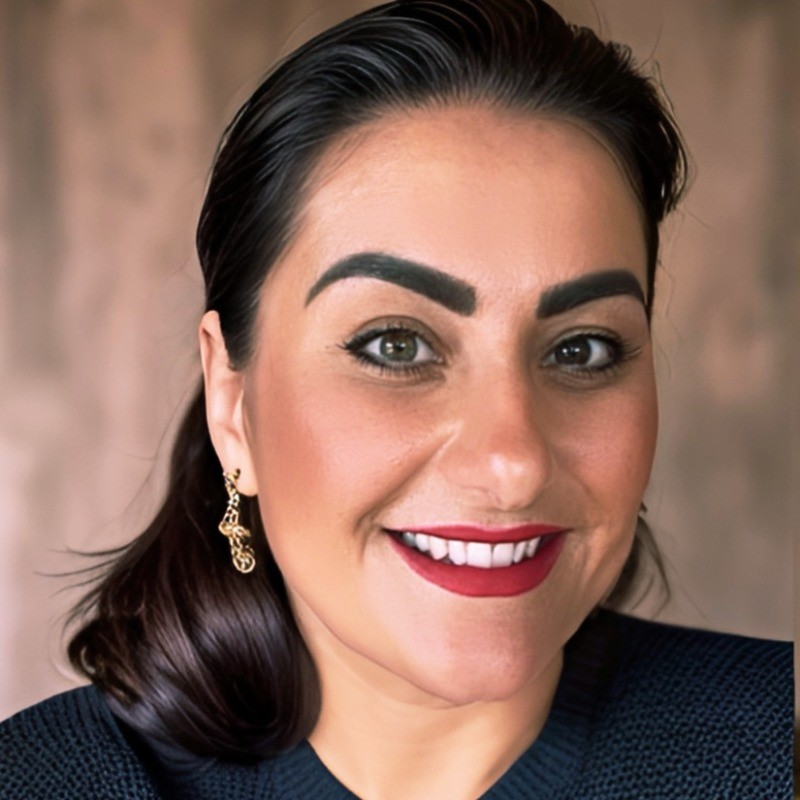
Natalia Tapia
Founder, Graduated.io

Mike Erlin
Co-Founder & CEO, AbilityMap
Register Now
Recruitment is under pressure. From high attrition and mis-hires to candidate experience challenges and disjointed systems, even the most well-resourced organisations are feeling the strain.
In this candid conversation, Natalia Tapia shares her journey from hiring 120 software engineers in 12 months to launching a business focused on improving how graduates transition into tech roles. Drawing on her extensive experience leading high-volume talent teams, Natalia unpacks what’s really broken in recruitment—and what needs to change.
You’ll hear:
- Why traditional hiring processes overlook real indicators of potential
- The true cost of misalignment between people and culture
- Why resumes, AI interviews, and volume-based filtering fall short
- How AbilityMap helps prequalify candidates based on values and capability
- What hiring for human skills and behavioural fit really looks like in action
This is a must-watch for HR leaders, TA professionals, and business owners looking to build high-performing teams and improve workforce outcomes.
“We don’t have access to really prequalify talent that matches our unique business needs. And that’s what it all comes down to—everything else is just noise.”
Natalia Tapia
👉 For a deeper dive into this topic, read our follow-up article:
The Case for Changing Recruitment: Why Prequalification is the Missing Link
All right, Natalia, very nice to have you with me. Thanks very much. Thank you so much, Mike. Really nice to see you today. We met through a common workmate that we both rate very highly and we found out that we are of the same tribe.
Absolutely. Absolutely. So grateful for that workmate. That’s right. And it’s about human performance and finding where people can really play their best in terms of the work they produce and the way that they enjoy it. I think that’s what brings us together. So I really appreciate your time. Can you just give us just share a little background about where you come from and what you’re all about, please.
Yeah, sure. Originally from Italy my parents are multinational, so I’ve got English mother, Italian father, grew up in Naples. Spent a little bit of time in the UK as well. I was I guess I was, a very avid student. I didn’t really pursue education. As a background. I also didn’t come from the place of opportunity or the family of opportunity to be able to spend on education.
So I went straight into the workforce. My dad was a big entrepreneur, had lots of Italian businesses, restaurants, and all those sorts of things. So I come from that background and my mom also in the catering space and I really enjoyed, the aspect of traveling and seeing different places in different cultures and being with different people.
So that kind of led me into the travel and tourism industry. So when I was really young, I started in the travel and tourism industry and I had a really great but also harrowing experience with that. And you never know what holiday makers do when they’re overseas. And that kind of led me into the technology space.
So when I was really young, I started in a telecoms role after I’d done a couple of years in travel and tourism. I was working in the UK for a big te telecoms company. I worked for them as a project manager, and I was really integrated with technology and the people of tech, and I absolutely loved it from the get go.
Fast forward seven or eight years from there, I went on, my working holiday visa travels, ended up in Australia, absolutely fell in love with it and started a whole career change. So I went from PMO tech. Tech recruitment, and that was a really big change for me because even though I love the people, and I’ve always worked with software engineers and IT guys and girls I’d never done the recruitment piece.
So I always had this missing link of how you actually hire people into businesses. And I’ve been on a really big journey since actually, so my background in Australia has been predominantly in the talent acquisition, recruitment leadership space. And I’ve really worked out that’s my icky guy that’s.
That’s the thing that I love the most. I love to work with people. I love to see their successes. I love to see them connect with communities and industries and really get the best out of their careers and life. And so that’s where I’m at today. Outstanding, and you’ve come from as you called out a number of of very recognised high quality companies in doing the recruitment and the technology, but.
You chose to start graduated io? Yeah, I did. And I think the reason that I did, Mike, is because. Honestly, if I’m being very transparent today, I’ve always been really frustrated by how broken recruitment feels. And everyone faces those same problems with no real, tangible solutions. And despite all of that noise that goes on, nothing really changes overnight because the challenges are so complex.
We’re talking about people. Those challenges are complex, but I think the thing that I love the most about recruitment is in fact the community and the people that I work with. Throughout my career, hiring and enabling high performing software teams and tech teams has really given me a sense of gratitude and achievement because I love to see those individuals thrive in their roles.
And that’s something that I’m genuinely passionate about. And it’s all part of the recruitment journey. And that’s the part I’m addicted to. Is that part where you can really see someone shine? And I’ve always believed then that the graduates have it the toughest. I’ve hired extensively in early careers and I’ve seen firsthand that high volume hiring and that approach just simply does not work for our emerging tech talent.
And that transition into industry is really overwhelming for them, especially in today’s competitive market. And the fact that in influx. Graduates are our next generation tech talent, but they’re really different and they have unique needs. They’re digital natives, they’re Gen Zs. Their generations are completely worlds apart from you and I.
And so they seek that purpose driven community connection. That sense of belonging and something that really needs to change in the job search. So I guess what I’m trying to do with graduated is focus on bridging that gap between education and employment and ensuring that those grads find those right opportunities to be able to connect with businesses, but also thrive in their job search.
It’s interesting what you’re calling out is really an understanding of of fit. In large part and like a genuine fit, not just a, I’ve got these skills in a way. I go, these generations have expectations of their employer or whom they’re working for, the environment in which they’re in.
And when I’ve seen what you are doing, it graduated it, it calls out how importantly you hold that. Requirement. So just an observation. Thank you. So the reason that we came together is because after you and I, after John introduced us, you said something to me. I think we probably had spent an hour maybe talking about what we were both doing.
And you said to me, Mike, why didn’t I know about Ability Map in my previous roles? And I probably said something like, we haven’t spent all our money on marketing. We spent our money on building the product and implementing it with our customers. But that question, why didn’t I know about Ability Map in my previous roles really struck me and I asked you to come today to.
To help me understand that. So maybe if you go back a bit with that question as the backdrop, what types of problems were you tackling back then that came to mind as opportunities to have? Been done better. And ultimately with Ability Map, I’m assuming that was the backdrop, but when you were doing those things, you were obviously committed to these components, but you weren’t able to get some things done, accomplished the way you wanted.
What types of issues and problems were those? So I think it’s a really great question and it’s definitely multifaceted because of the fact that recruitment is so multifaceted in its way. The one thing that stands out to me about recruitment is that it not only really outdated, but it’s expensive.
It’s time consuming, it’s biased, and if it’s not done well, it can really impact a business in their success and in their presence. So there’s quite a lot against performance and culture and budgets, and that ties in. To the quality of the candidates and the people that you hire. Some of the key challenges that I used to face in my career were across employer branding and talent attraction, for example, and building that strong employer brand and making sure that you can attract that right talent.
But then many companies struggle to even create that in industry and have that reputation that resonates. Resonates with top talent. Then you’ve got the high volume issue and the resources drain. Sifting through probably what is low quality applicants all day long, managing all those unconscious biases, manually handling all the candidate data, wasting all the valuable business time and resources to try and deliver an exceptional candidate experience or quality higher.
Then you’ve got the cost piece versus the ROI. So despite spending all of that money on job ads and branding channels, and all of the external staff that you could easily spend hundreds of thousands of dollars on a year, if not more. Businesses often fail to find that right talent, and that’s the true needle in a haystack.
They’re trying to look for the quality matches amongst the noise that is our generation of talent acquisition and recruitment, because there isn’t anything that can help us do it better right now, as seen as a broader value proposition. And in, in line with that, you’ve got.
Data. So recruitment data, revealing all the truth about the skills gap and the hiring effectiveness and your, the areas of your businesses that are not thriving or that are really lacking in terms of skills. And then you’ve got retention and onboarding. You’ve got all the higher volume of hiring often.
Increases that through hiring managers. So they get stressed, the teams get stressed, the hiring managers get stressed. And you are trying to not only hire top quality talent, but also retain them at the same time to say, Hey, go through this and the journey with us. We really want you to stay, but also we are going through all of this.
Managing all these high volumes of people into our brand, but we want you to be able to perform on the job, stay in the job, be committed to the company, and then ultimately create that amazing and unique culture. So really for me, those issues come down to the fact that we don’t have access to be able to really pre-qualify, qualify talent that matches our unique business persona needs and skills.
And that’s what it all comes down to, because everything else is just noise, right? Everything else is just wasted resource. Yeah. So that’s been my biggest challenge when in recruitment roles or having recruitment teams that report into me for talent. It’s in. So you started by saying it’s multifaceted.
No kidding. ’cause you covered a lot of ground, but what you actually covered what I heard was the prequal. In other words. Especially in a volume environment, how can you better identify where to spend your time with whom first cab off the rank? Second cab off the rank was you would do the best you could with.
We will talk about any tools that you found were effective or not as effective as you thought in a second, but the best you could to then determine suitability fit. Qualification for the role at hand, but then you also mentioned retention and growing in the business. So in that one response, you touched on all aspects of the talent lifecycle and how do you know where to spend your time and whether you’re progressing or not along the way that, is that a good in, did I hear that right?
Absolutely. And it all comes down to also ensuring the one major piece of all this, which is the candidate experience. Yeah. That is your brand, that is your attention, that is your culture all together. And the candidate experience is what we have to negotiate on. And especially for me when I’ve worked in very high volume, busy environments to try and tackle all of those areas is just.
It’s really difficult, almost unachievable actually for the quality that businesses want. Okay, great. So let’s take it the next step. So back then, not now in graduated. ’cause graduated is really about addressing those gaps, right? Absolutely. So back then, what tools and processes, and I’m not asking you to name vendors or anything like that, but what tools and processes were you using to try and.
Better identify qualified talent earlier and better determine are they suited for the role that you’re looking for, and better able to determine, do they have the longevity to go further in the business and to do so in a candidate experience. What were, what types of things were you using that just weren’t quite getting it done?
Okay. So maybe holistically, because there are so many tools. Yep. I’ll talk from a bit more of a broader level when it comes to talent acquisition. So the problem with recruitment is that you’ve got an overwhelming amount of disconnected tools. So each solving just one piece of the puzzle in recruitment.
So you can have candidate tracking systems. You’ve got ai, AI interview platforms, assessment centers, onboarding, performance management, l and d. Businesses either need to pay for multiple platforms or create internal systems or data points where they can leverage all of that information to be able to create the people data story.
And then work strategically from that. So to work out where they’ve got gaps in their processes, where they’re missing information, where potentially people are dropping off in the experience. There’s no centralised solution. So it’s really hard for companies to just keep things running smoothly, let alone drive their real growth, because they’re managing multiple systems that have multiple data points that are actually not conjoined and don’t come together to create this one beautiful piece.
Of data or experience that they can look at and say, Hey, this is what our people in our business look like, and people are the most crucial thing to any business. That’s the first thing that we should be looking at. So for me, I think, as you mentioned, what I recognised that was missing was not only having.
Centralised connections between those data points, but then also being able to qualify the right people coming through to all of those areas. How do I know if I’m hiring, for example, 60 live requisitions across three different business units, the candidates that I genuinely should be sending in for.
AI interviews, for example, or online assessment centres, like where am I actually spending the right time with the right candidates that are gonna eventually convert to a hire? And I think this is where the noise kind of overshadows everything in recruitment is that you can’t. You can’t actually piece it all together without missing significant things that create value in recruitment, like the candidate experience.
So a lot of those different platforms, yes. Okay. Some of them were really great. But on a day-to-day basis, if you are managing that amount of volume. You almost can’t get the return on investment back from those platforms because also they’re just in themselves high volume. So it’s about creating, not only a streamlined process to allow the quality to come through, but recognising that actually there’s.
There’s this prequalification that happens before the prequalification of those candidates that then you drip feed through the recruitment process. And that is where I see ability map having, a baseline introduction to the candidates that then we invite into our business to interview.
It’s a really it’s interesting and I’m thank you. Thank you for calling out where we fit because I think there’s I’ve never been in recruitment. Okay. If in terms of being a recruiter, but my co-founder built a billion dollar company that did it, and I’ve learned a heck of a lot about recruitment in seven years of being with Kev.
Okay. And a trend that I’ve seen change. Is a and not big enough in my opinion, but it’s coming, is that the technical skills and the work experience, not only the education, but where you went to school became the prequalification, were the prequalification criteria that were. Broadly and still often are applied that were essentially producing results that would essentially say about a third of the time a manager would not rehire.
So that’s broken. And what I saw and have seen, which is obviously what we do was focusing on. The durable, the transferable, the soft skills that were required in the job to be effective, and figuring out how to assess, evaluate individuals to that as objectively as possible. Okay. And it’s fascinating.
Sorry, I’m gonna go off a little bit here, but in the last six, 12 months, we’ve done a lot of work in digital skills and cyber, and I’ve been to a number of conferences and breakfasts. Ironically, the last two that I’ve been to have been executive leaders in cyber that are women. Okay. And historically you would’ve heard people talking predominantly men, quite honestly, speaking more about intelligence and technical skills as requirements.
But when you speak, when I go to these conferences and listen to the women, it’s so much more about team fit, culture fit, suitability to work together. It’s amazing. So anyway, so in terms of metrics. Are there any metrics that stood out that you wouldn’t, you would say, are not hitting the mark?
So for example, if we’re talking about pre-qual, in other words, would a metric be. We’ve had a hundred applicants and we’ve interviewed, we’ve been had enough resource and time to, to do qualifications and call downs on 20 of them, and we’ve gotten 10 of those across for interview, but we’ve only hired one.
In other words is there a set of metrics where you’re going, gosh, if we could have had a better hit rate on where we spend our time, is there, are there metrics for that? Yeah, absolutely. So this is ties into a lot more of the strategic planning Okay. Initiatives that employers have. So you’ve got all of your recruitment data that should and would be pulled into part of your workforce planning.
So that’s your time to hire for TTH Yep. Your candidate experience. Yeah. Your conversions to hires as well. And then your, I guess your broader. Data against channels and budgets and what you’re spending in recruitment, right? So you’ve got quite a few different metrics and points that you need to cover when you are running strategic workforce planning to understand from a recruitment operations perspective, how does talent tie in with the broader business goals and then match the budgets that are there to be able to achieve what those broader business goals are.
Like I mentioned before, making sure that you have the right data points is crucial. So we’re talking about many systems here in recruitment, but one of the most predominant ones to measure time to hire and and the recruitment data would be your a TS system. So your tracking system would be able to, you would either build like I’ve done in the past, or you would be able to access reports that you can pull in to give you a basic story and understanding of what your recruitment flow looks like against your process.
Has been implemented. So having those right data points is really crucial to understanding and measuring how your function is working. But in my experience that misaligned data across the platforms can easily distort those insights. And I think that’s where. There really is a gap and you don’t have that clear collaboration between not only internal teams, like for example, myself working very closely with finance to understand our workforce in its entirety, and then also what that means in terms of resources versus what that means in terms of talent and recruitment.
So there’s quite a lot of different connection points, human and data points that need to connect together. I think where businesses lack is that they don’t have anything to assess their critical skills against. That can then assess the candidates and match them. And again, this is something that Ability map I know to do very well, is that they offer that opportunity for employers to not only talk about what their critical skills are as a business, what they need to succeed, which is all part of your skills mapping and planning and workforce planning.
But then also be able to then see that data in the individuals they have chosen to take through that process and be able to match them to those business critical skills as well. So it’s quite a big piece the strategic workforce planning piece in any TA team because it really has to align very well with what the business goals are, to be able to see a return on investment for your people function.
Thank you for calling that out because when we founded the company, we always say that business context matters and is everything. And I can say this in America more easily, the Moneyball movie was about defining what drives winning baseball games, and that’s getting on first base.
And so we often particularly in America, remind our clients that you gotta figure out what you need done first. To drive the business. And then what are the human skills that underpin that being able to happen? And once you’ve earned the right to understand that, you’ve earned the right to have a conversation with candidates about how well they suit that or can they be developed to do that?
Yeah. So maybe just briefly if you’d had ability map back then. Across the components, what would’ve you seen changing? So I feel the real value to myself and my teams would’ve been that we can look beyond resumes and assess candidates unbiasedly, which is something that I feel every employer should have a goal to do.
Those critical skills and human values, those are things that, as you said. Businesses and employers need to define first before they go out to market to hire. So in those fast paced, high volume environments where I’ve always worked, those in-depth interviews aren’t always feasible. So tools like Ability Map could have solved a lot of those immediate challenges that we had with connecting businesses with quality hires.
Because. Being able to value, being able to, sorry. Being able to assess their skills and their values is also really crucial for long-term success. So we are not saying, we are not talking just about the recruitment part of the business, we’re actually talking about the succession planning and the HR part of the business.
And values are really hard to assess. They evolve over time, but we also all do come fundamentally with our own values and how they match to each business is also really important to the culture and then the future success. There’s an example here in terms of, my early career experience.
I was in a role as a TA manager and I had to build out. Not only my talent function so my team from scratch, but I also had the huge, big, hairy, audacious goal to hire 120 software engineers in 12 months. Wow. We had no processes. Wow. For technology. We had a very limited budget. If I told you, you’d cry, and the pressure to hire was intense.
Those hiring managers were really overwhelmed. The team that I was then trying to hire and then onboarding was working around the clock. We were trying to get. Everything going, establishing not only both the brand presence, the talent pipelines and just hit those aggressive business goals, but also achieve the goals and then, follow through.
And then it only came around nine months later, I was invited into the strategic workforce planning team, and this was quite early in my career. And the first time that I’d actually had an opportunity to go into the core team and assist in strategic workforce planning. I saw a lot more HR data that revealed that over 20% of those people that we had hired in the 12 months were leaving.
Wow. And that was not only across performance issues, but it was across the strain in the realisation that no one considered that bigger picture when we had gone to market for mass hiring and the rapid growth impact that created on culture retention, return on investment. So I was sat there with my senior leaders in this boardroom looking at these numbers.
And it really sank into me. I think that was the moment. It was a 2016 moment. It really sank into me how important getting the right fit for the business is, let alone having those really big, hairy, audacious goals to hire and scale. You’re never gonna get it perfect. You need to get it right and it needs to be good because otherwise it’s detriment to the business.
And you can see the numbers never lie. We all know that data never lies, right? Numbers never lie. So you can see that when you go through that process after the fact. There’s a question that, that was coming into my head while in that last statement, which is it more important to hire, to culture, to qualify to culture and value?
And human skill fit to the role at hand as the first qualification? Or is it more important to do technical in your view? They, there might not be a difference, but just that, and that’s what came to mind. I. So my personal view, and this is not for anyone else but myself, my personal view, in my personal experience of hiring literally thousands of IT and software engineering professionals and building huge teams and small teams and founding teams, is that skills can always be learned and taught values can’t.
For example, and this is a great example actually, the other day I had a conversation with a startup company that has received quite a big bit of funding that have approached me to help them do some hiring. Now they’re in the AI space, scaling rapidly have got probably over 70 live roles open across all of their different business business units or I say teams, not business units ’cause they’re a startup.
They really want to be able to hire fast and efficiently. Now, the thing is with startup, and the thing is with that specific project is that if you don’t have somebody that has the same values as those who work very well in a startup, they are absolutely going to burn out and leave within nine months.
And that’s a fact. I’ve seen it happen. I’ve seen it happen time and time again. So while skills to me are truly important, and as you start to get more senior, they do have a lot more space at the table. The underpinning success for any business are the values that match with the candidates and the employers because that is what drives the business.
If you are genuinely invested in a. You’ll make it work no matter what. It’s really interesting that, thank you. And that’s we believe that it’s important too, obviously. We’re working with a client in government heavy digital focus. I. Cyber is an area of need for obvious public data and security needs, and they recognise that they are competing with Canva, Atlassian, Microsoft, this AI startup that you just said, that’s hiring 70 people.
But in working with the head of this, part of government we helped her to understand that the foundational attributes of the technology people that she’s seeking are different than those in your 70 open recs in a startup, because the people that she’s looking for are not in it for the stock options in government.
There ain’t any. They’re in it for service. Doing good to community and being able to identify whether people have that inherently and as a strength is a fundamental criteria by which they should continue in the process or not. So I just share that as an, as a real world tech example because they don’t want to be talking to the ones that are gonna go to your startup because you’re the ones going to your startup are in it for the upside in a big way.
’cause they’re gonna be under the pump coping with pressure, unrelenting hours that they have to do and blah, blah blah. And they’ll get rewarded for it. But the ones who are coming for government, they’re just about making, the Central Coast work better. Absolutely. And I think, also what you mentioned, the competition part there, but what employers also miss, they’re very quick to talk about competition.
They’re very quick to talk about, we want to be like a Canva, like an Atlassian, like a, transport New South Wales, for example. But actually what they struggle to see is their individuality and. Employ a brand story to industry. Everybody has an opportunity to stand out because everybody is unique in the way they hire and the skills and the values that they want to be matched with.
So it’s about amplifying that, not sitting and looking at competition. It’s looking at the quality of candidates that genuinely believe like your government, client in service. And that’s why I’m a very service orientated person, so I would choose a government client maybe versus a tech startup, but I’ve also worked in startups.
So it’s about trying to find those unique matches and that’s the goal because what you can’t see on a resume and you can’t see in a conversation. Or a three to four point interview process is the true ingrained ability and values of that person now. And it’s so far, now you’ve just explained why we’re partnering together and I think I’m gonna maybe close this out with the question where.
Why does Ability Map fit into your solution? But I’m going to maybe see if I can direct it a little bit because defining, I think you called it the unique aspect of a given company and what they need. I think that’s where I see you spending time to before even sourcing. Working with your clients to recognize, oh, are we looking for technology, high quality technology, people that want to be a part of service to community, or are we seeking high quality digital and technology people who want to change the world and get compensated for it?
They’re very different. You’re not competing for the same talent. And I think you, is that where you’re using us in a big way? That’s what I’ve se I’m hearing and seeing even more strongly. Yeah, absolutely. And that’s the one thing that I’m really committed to and I’ve always been committed to in my roles.
The first thing I want to understand deeply is my employer value proposition. Whenever I’m onboarded in a business or whenever I’m offered an opportunity to be a talent leader or whatever it is. I always want to understand their EVP. I need to understand who they are. Why would people wanna work here?
And then I’m committed to then going above and beyond for them to be able to match them with the right talent because I’m a firm believer in quality over quantity, and I’m a firm believer that there is somebody for everybody. And so employers shouldn’t be wasting those. Thousands of dollars each year on all those ineffective channels.
We spoke about failing to meet ROI, let alone spending the valuable time and resources that they have interviewing candidates who just won’t convert. So I’ve seen budget sheets with my employers that would actually bring tears to your eyes, and those funds are just. Squandered, yeah. Into overcrowded, untargeted, and impersonal recruitment pipelines.
And that adds little to no value at all to the businesses, let alone the recruiters. So I want to be able to use Ability Map to help my employees understand not only their critical skills, but also the values of each of them individually, and then matching that with the best talent for them. The best emerging talent in my case because I’m in the tech graduate space.
Absolutely. So it’s about just changing the game of recruitment and just starting to use technology for the greater good and providing those real high quality matches that benefit both the employers and the students because ensuring that smarter, more efficient match is gonna have an effect on everybody.
And absolutely it’s a holistic point of view from my case, it’s a holistic point of view for quality talent. And it’s really easy to get drowned out in the noise of AI at the moment, but this is why I love Ability maps so much is because there is no AI involved here. This is assessing deep ingrained human values and critical skills to be able to say, yes, absolutely this person can do the job.
Or no, they’re not matched to your unique business needs. But actually they’re really matched to say, for example, this client and their business needs. And I. Is the differentiator in average to excellent recruitment and I’m not gonna even, I think that’s a fantastic way to end this. It’s a pleasure to have you here and to be working with you and I wish graduated do io the absolute best of success.
Thank you so much, Mike. I really appreciate it.