
Graduate Program Assessment
Place the right graduates in the right roles
Graduate Programs are a cost-effective way to build leadership pipelines and close emerging skill gaps. To be successful, graduate programs require significant investment to carefully evaluate candidates and deliver a meaningful multi-year development program.
Losing graduates early from your program can be a frustrating waste of time, money, and effort. When candidates have similar qualifications, limited experience and meet mandatory requirements, it’s hard to tell your candidates apart, and AI is only further compounding the problem.
The challenge is understanding what causes graduate placements to go wrong to future-proof your next intake.
%
Reduction in graduate time to competence
– Reece Group
Built for HR leaders, talent teams and graduate program managers designing their next intake.

Why graduate placements go wrong
Graduate placements, like most mis-hires, go wrong for the same reasons: the person lacks the necessary capabilities to get the job done and operate effectively in your environment. Most selection processes cover the non-negotiable requirements (a relevant education, right to work in the country, a level of digital literacy or technical competence appropriate for the role). Yet they miss what actually predicts success.
Interviews reward confidence, not suitability
Interviews favour preparation and presentation. What gets evaluated is not necessarily what the role actually demands.
Decisions default to gut feel
Without objective capability data, final placement decisions rest on intuition, repeating the same inconsistent outcomes.
Misalignment shows up in year one
Graduates leave when they realise they’re working harder than their peers to deliver the same work, or they feel like they just don’t fit.

What’s the difference between assessing graduates on skills versus capabilities?
Skills measure what someone can do. Capabilities measure whether someone will do something, consistently and under pressure.
Take networking. Everyone can network, but those with strong capability in building networks and personal selling will initiate conversations with strangers, build rapport quickly, work a room and leave feeling energised. Those low in those capabilities will arrive anxious, engage with those nearest them, and leave exhausted.
Assessing graduates’ capabilities gives you greater insight into behaviours you can expect in the workplace than you gain by assessing skills alone.
What graduate program assessment looks like
A four-step process that adds a capability evaluation layer to your existing graduate hiring workflow.

Define what you need
In the same way you define the technical requirements for your graduate roles, define the capabilities needed for the roles you intend to rotate your graduates through.

Select candidates
During the selection process, evaluate your candidates for their match to the mandatory and desirable requirements of your graduate program, including capabilities.

Match to roles
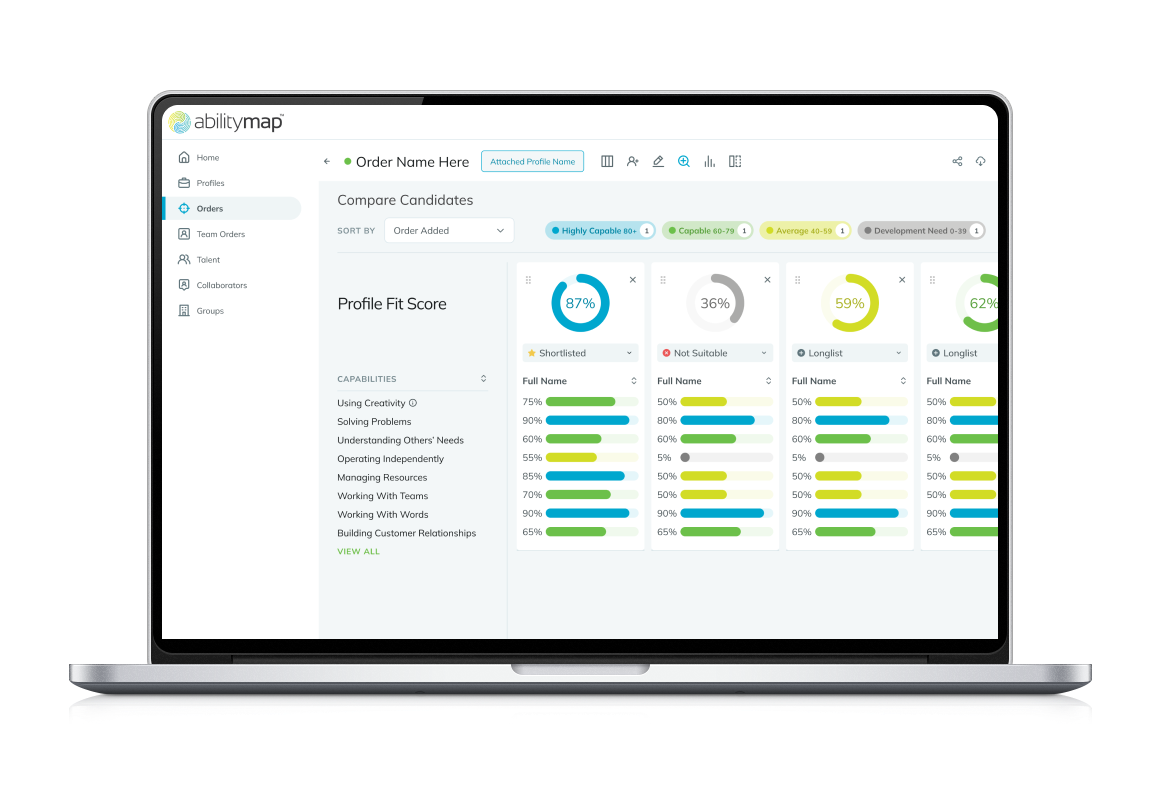
Throughout the selection process, identify the graduates most suitable for the roles available. This includes matching each candidate’s capabilities against the graduate program roles and, if known, future placements. This is achieved using one assessment compared with multiple role profiles.

Coach and develop
Throughout the graduate program, target learning and development to guide your graduates in the ways you know will benefit your organisation, and where your efforts will add value. This includes strengthening their behavioural capabilities.
When should I incorporate assessment in my graduate hiring process?
When you choose to include an assessment in your hiring process is up to you. Some organisations introduce it as the first shortlisting step reducing shortlisting from days to hours, others introduce it prior to first or second round interviews to inform behavioural-based interviews. When the talent market is tight, some elect to complete it at the time of offer.
Regardless of where the assessment sits in your process, AbilityMap helps you process high volumes and compare seemingly identical candidates in ways that make the difference at time of hiring and promoting.
AbilityMap’s capability intelligence layer turns a one-time assessment into a multi-year, multi-purpose tool for capability-led hiring, development, rotations and future placements.
What is a capability assessment for graduate programs?
A capability assessment evaluates an individual’s general mental ability and behavioural preferences across a range of measures. A capability assessment for graduates is both an assessment of the individual, i.e. their strengths and areas for growth, and an assessment of the environment such as the work style of your organisation, your graduate program expectations, and the placements within and beyond the graduate program. Measuring both the individuals and your environment allows you to accurately assess graduate role fit at time of hire and beyond.
Can one assessment work across multiple graduate roles?
Yes. Each graduate role, just like other roles in your company, requires its own profile of the capabilities required for high performance. These capabilities are selected by you from our 31-point capability framework. The assessment covers all capabilities in the framework, so you can view a graduate’s suitability to multiple roles from one assessment. This is the same process organisations use to evaluate workforce capability, conduct a skills-gap analysis or consider future roles for high potential employees in succession planning. This makes one assessment suitable for initial selection, future graduate rotations, and ultimate permanent placement in your organisation.
The benefits of capability-led graduate recruitment
People who apply their natural strengths at work find that work comes more naturally to them, they are energised by their work, and both job satisfaction and productivity is increased.Graduates are no different.
Reduce year one attrition
Capability-led graduate recruitment means you will know what your graduates are likely to enjoy and where they will thrive before they join your organisation, significantly increasing the likelihood your graduates will want to stay thus reducing year one attrition. Put simply, capability-led graduate recruitment puts the right people in the right seats, with data to support it.
One assessment, multi-year utility
Graduate-led development pathways
Graduates signing up for a graduate program often have extensive in-depth subject matter expertise, but they can lack some of the capabilities required to operate effectively in a workplace such as solving problems, operating independently, displaying initiative, and working with teams. Understanding your new cohort’s capabilities helps you complete a skills gap analysis and plan individual development paths before they walk through the door. This data-led learning and development approach leads to more efficient budget spending, and more meaningful coaching and performance conversations with managers.
Reduce bias and subjectivity
What our clients say…
We recognise the significant investment organisations make in their graduate programs.
Future-focused organisations apply a different lens, looking for ‘best fit’, ‘future-proof’ candidates, low attrition, all built on a foundation that cannot be taught; capability.
Reece Group
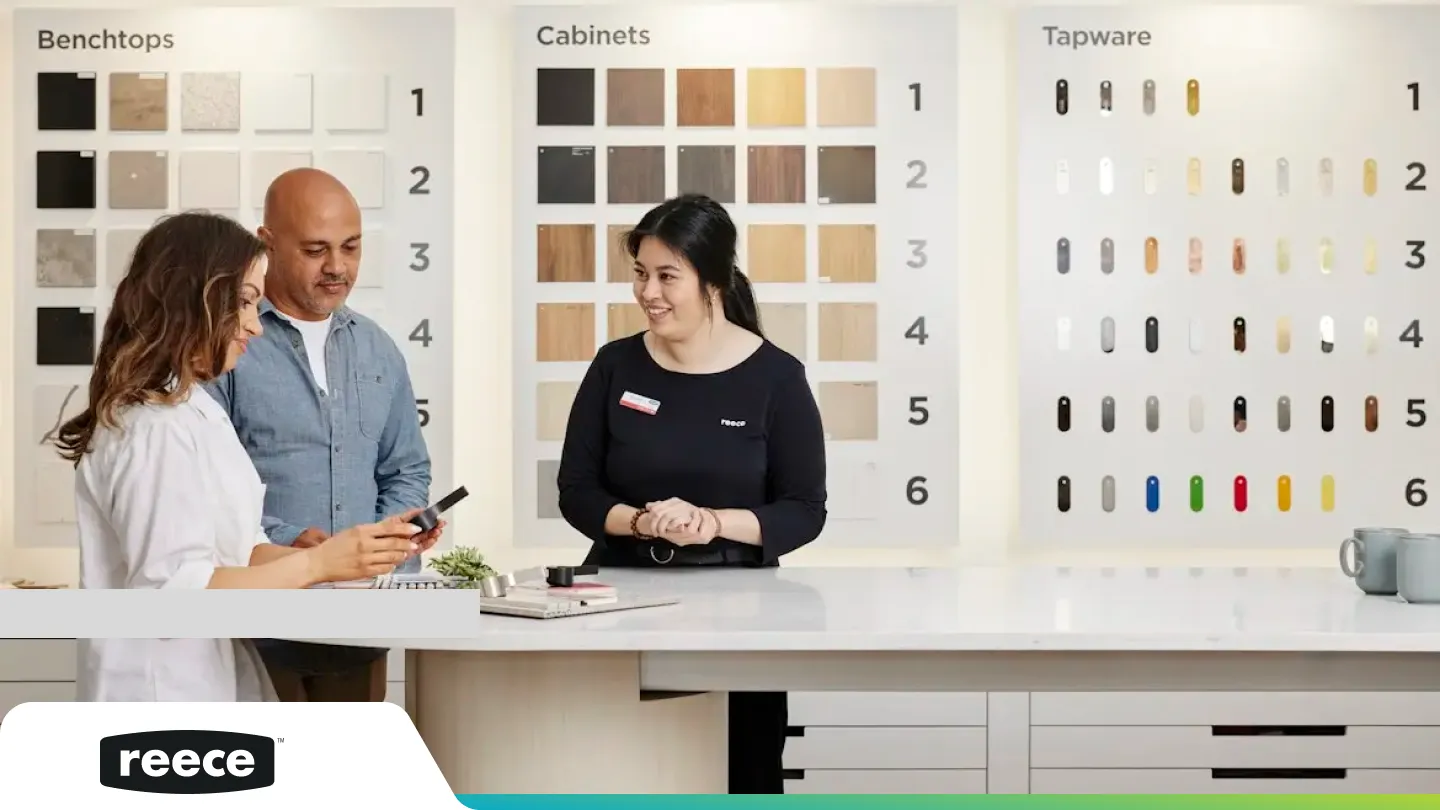
Specialists in bathrooms and kitchens nationwide for over 100 years, Reece Group introduced AbilityMap to their flagship graduate program. Within 12 months, they reduced time to productivity by 66%.

Gradstack
Founded by Natalia Tapia, Gradstack was born out of a belief that graduate recruitment was broken, and key to achieving her purpose was AbilityMap.
Deswik
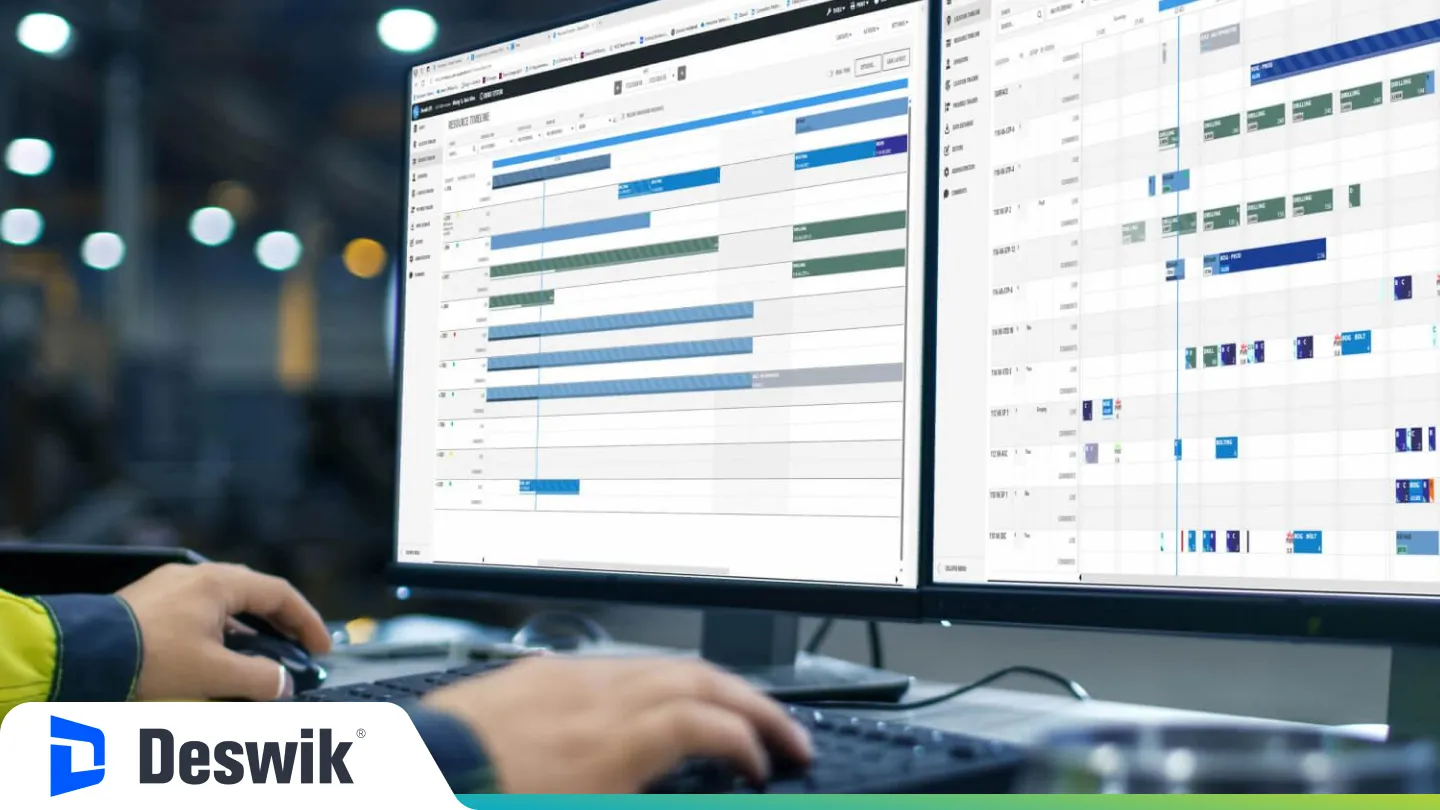
“Using AbilityMap via Gradstack has completely changed the way we evaluate early-career candidates. We’re no longer guessing who might ‘fit’ we’re seeing genuine data on their natural capabilities like responsibility, adaptability, and problem-solving. The alignment between our top performers and the graduates we hired through this process has been spot on. It’s reduced hiring noise, improved retention, and helped us make more confident hiring decisions.“
“The AbilityMap assessment gave me genuine clarity on my natural strengths that I hadn’t fully recognised before. As a final-year IT student, it helped me understand which capabilities come naturally versus what I’ve simply learned. The results gave me the language and confidence to better articulate my value in applications and interviews, helping me communicate why certain roles align with my strengths. It’s been really valuable for navigating my career direction with more confidence.”
Ready to recruit graduates on objective capability data?
Stack the odds in your favour so that your next cohort achieves its ROI. One assessment with multi-year, multi-role application.