
Webinar
Movember evolves Leadership with MOmentum
Presented by
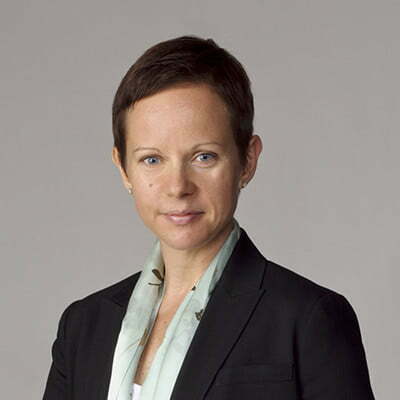
Amanda Green
Movember Australia Chief People Officer
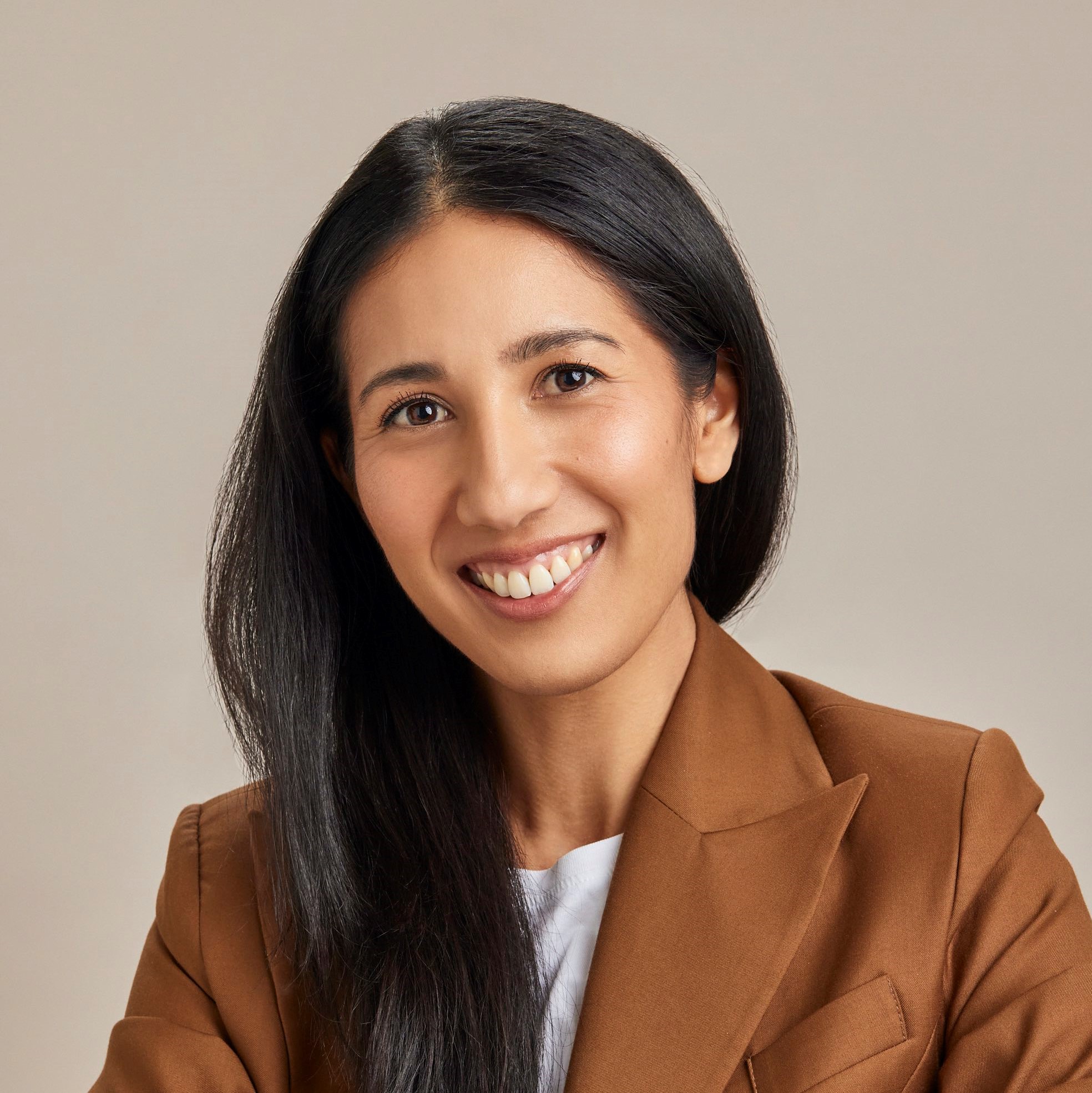
Crystal Andrews
Host
Register Now
Join Movember’s Chief People Officer, Dr Amanda Green, as she shares how she set out to evolve the iconic organisation’s global leadership culture — and the critical role a human-centric, capability-focused tool played in getting there.
Faced with the challenge of aligning a diverse leadership team across 22 countries, Amanda knew that off-the-shelf frameworks wouldn’t cut it. She needed a scalable, evidence-based solution that could reflect Movember’s unique culture, surface real behavioural insight, and guide both recruitment and development decisions.
In this webinar, Amanda unpacks:
- Her search criteria for a HR tool that aligned with strategy, not just structure
- Why Movember needed more than static reports or generic frameworks
- How AbilityMap helped define a leadership capability framework in under 7 days
- The surprising differences between executive and senior leader capability profiles
- How behavioural data is now used to guide hiring, development, team cohesion and talent mobility
“This isn’t about good or bad results. It’s about real capability, real conversations, and making better decisions about how we lead.”
Whether you’re rethinking your EVP, scaling leadership development, or building workforce capability for the future, this is a must-watch for progressive HR leaders.
Hello to everybody and thank you for joining us today for what’s gonna be, I think, a really interesting conversation about. Performance about true HR leadership and of course human-centric technology being used to drive really important organisational change. My name is Crystal Andrews. Now let me officially introduce Dr.
Amanda Green, registered psychologist, cultural transformation expert and chief people officer of Movember. Amanda has spent almost 50. 15 years driving cultural and organisational transformation at places like NAB Australia. Post Medibank Richmond Football Club now Movember. Hello Amanda and thank you for giving us your time and sharing some expertise with us today.
My pleasure crystal and hopefully I’ll be able to answer some really interesting questions with everyone that’s joined today. So thank you. I’m gonna, I’m going to get straight into it. Actually. I think every company that I’ve just listed that you’ve worked for needs absolutely no introduction.
Like these are some of the most recognisable organisations and brands in Australia. First, I wanna take a step back and just get a sense of, when you came to Movember and were looking for a tool to help you shape this team and take it in the direction that you needed to.
What were you looking for in, in some sort of assessment or capability framework? Sure. So no surprises. I’ve built a few of these in my time that, that have been different including at a football club. So if you think about a capability framework at a football club, It’s unheard of.
But I think what I was looking for is not dissimilar to what, where we did at Tys. It’s something that I don’t have a vast c o e sitting behind me with great thought leadership like I’ve had in other organisations where, that’s the sole purpose of making sure that we are.
Building best practice that’s fit for purpose. The other thing that I was really passionate about with this framework was that it was led by strategy. So it was really privileged. I landed right in the time with Michelle, who was then, her foray into November was I think a month. And then this little thing called Covid.
So her first, eight months on the job was actually not knowing how the charity sector would fare during that period of time. But also knowing that we actually needed to be focused on the future as well as shoring up currently. So landing with strategy led first and lots of conversations about, or aspects of that, talking about capability and transferable skills, putting some objectivity around it in a way that wasn’t over-engineered was probably Crystal what I was thinking.
And looking to the market to say I can’t be researching what are the current capabilities? I need a tool that helps me work globally. So we’re in 22 countries. And despite everyone thinking that most of the countries that we’re in are primarily English speaking, there are cultural nuances.
But what was a really easy way without having to roll in. A truckload of people with my qualifications. So technical expertise to, dissect and assess people in putting some objectivity around the transferable skills that we need and actually making us fit for purpose for our future. I. With always that prudent use of resources.
And at its heart it’s a digital solution. So that was the other thing that was important to me. We did toy initially with the idea of building it ourselves. And our fabulous c i o stopped me and said, that just doesn’t make sense. That, that were probably some of the aspects objectivity.
Digitise globally accessible. And I’m really pleased that I came across Mobility Map because it’s quite different to some of the solutions that I’ve used in the past. In what ways? What kind of gives it the edge over what you were evaluating. Yeah. The utility. You don’t need to have a doctorate in psychology to use it, right?
Oh, it’s gonna be one of my questions. Yeah. It helps because I could actually see the thought, the thoughts behind it. And there, there’s an implicit sort of assessment as I’m looking at tools of the empirical rigor. And for those that don’t know, Vember has both an income and an impact part of our business.
We are known and we’re famous for our income. One month of the year, but we do things throughout the year. What surprised me I must admit when I started is we have ano another whole half of our business that’s around impact. It’s actually the clinical impact. So we don’t, we do fund others to do work, but we have a whole bunch of clinicians in and of ourselves and are very deliberate and focused on empirical backed research.
So I’m coming into an organisation that wants to know what we are doing isn’t just pop culture. There’s a bunch of psychologists here and our impact research is really important ’cause it gives us credibility. So for me, I was also looking for a tool that matched the culture in that way. It needed to have the validity so then we could buy into the solution.
So it, it had all of that without it being I. Too foreign and not accessible from the way that the assessment was delivered. And I can talk to some of the stuff that we’ve done, but how the results are used and how in real time you’re getting the feedback and actually using it to make decisions.
Unlike some of the solutions that I’ve looked at, which I’m sure we’ve all used, you do the assessment, it goes into a black box, a whole lot of static reports are produced, and then you get your one point in the data. I’m using the Ability Map data in decision making. I won’t say daily, but it’s almost every day for solutions that we’re looking at or validating behavior and actions that we’re seeing in our leadership group.
I haven’t had a tool like that before. Can you talk about some of the results or maybe how it’s changed the hiring process? Yeah, sure. Hiring process is just one. We introduce Ability Map Just a pre-Christmas, which. For most people’s planning, thinking matter, why pre-Christmas?
We have this little thing called campaign. And like with most blackout type events, there’s a period of time leading up to and during campaign where the business need to focus on their job at hand, which is income generation. So I think that’s, this is a testament to the tool that I could launch something after such a big, heavy push.
People completed it. We had a hundred percent completion and we turned the results around straight away before they went on Christmas break. So we did what we called a light on the hill, but I got the top leaders to say, if we’ve got our five year strategy, which we were, completely immersed in by that time, what are the things that we are gonna need to do as a leadership group to make this successful?
Not just, what’s on the paper, but how are we gonna act and behave and what are those critical, Inherent skills. And I think that the one thing that I didn’t touch on before is a believer of a strengths-based approach. Not trying to put a square peg in a round hole. So let’s start with that PO positive psych intent.
And being a data person, I was really looking for, I. How different are our leadership groups or is there any differences in the different types of leaders or are we all pretty much aligned? And then so that assessment in and of itself across all the capabilities were actually really aligned and very quickly were able to identify those top eight capabilities.
They had. A relatively good representation across that, those human kind of factors that we look at with the ability MAP framework so that we weren’t too oriented maybe on communication at the altar of, planning on the whole. So for me, that was pleasing to see I.
And then obviously we didn’t imprint for each of the individual leaders to say, okay, what are your superpowers and how do you match up against this agreed framework from two points of view? The diversity of the team, have we up to that point inadvertently? Picked people that have strengths like us, even though we weren’t necessarily looking for those deliberately.
Do we have any pockets where if we were gonna be hiring in that we probably would want to backfill? And does this also set us up for success when we look at external benchmarks? And not just being introspective, but if we think about some of the models that we can use, like the. Hybrid working framework and the capabilities that Mike and the team have there.
So looking at it from a multi-dimensional lens, so there’s not one way of looking at the data, but using data to inform those decisions. And also from my perspective, resources, again, finite funds. If there was one particular. Area which we are all could value some more development. And that helps me sharpen my focus rather than going out to those 19 leaders and asking them what their views were.
You touched on recruitment, but I think there’s a development aspect. There’s a team cohesion and diversity aspect. There’s looking at the type of leaders we wanna cultivate from a strategy and also best practice like the Dweck work and those sort of things. And not just one size. I can give my c e o real time feedback straight away on what are that per, what’s that person’s inherent strengths?
How does it line up to their current role and how do they sit as leaders? And pre-Christmas in a matter of, seven days, we had all of that at our disposal. To have all of that in such a short timeframe in and of itself is quite incredible. I imagine you’ve probably worked with all the tools where you are, you’re working on that suite of information or that data set about, about, the team across an organization for a much longer period of time.
Absolutely. And so if I go to what I thought would be the most helpful heuristic, which was what we did with tags. And so what I was able to do with Ability Map that we weren’t able to do there is that there was no sort of solution of doing card sorting. So we literally had a cross representation group of people, including players doing that exact ex exercise.
What would be our top eight? And deliberately having the Koran Gomane Institute. So for those who don’t know, tides, the top part of that weird shape building is actually an Indi Indigenous Institute, along with some of the players on the field today, and the various corporate teams.
And having that mix of people in the room, I. To create a collective view through a card sort mentality, which works well when you’re all domiciled in Richmond. Doesn’t work so well when I’ve got friends at the moment, asleep in Canada and the uk I was trying to approximate that sort of collective sharing and collective ownership just in a different way.
To add to your point there, Krisa what we’ve done since is shared that information. I think the other bit that really struck me personally was the idea of the environment. This was environment and context specific, not just what’s the latest fad in terms of human capital management.
And we’ve had some really good conversations about. If these are our inherent strengths, we’re all effective leaders. So these are, is our leadership framework and maybe some areas that we’re not as strong on. That takes us a little bit more energy and effort to act through what is it in our environment rather than us as humans that might be getting in the way, the policies, the systems, the unwritten rules in our culture.
Beyond ’cause we’re all successful leaders, right? We wouldn’t be here if we weren’t. So is there something in our environment as leaders that we can just remove as roadblocks? I don’t think I’ve had that conversation about a capability framework before. So that e in that, in that equation really cultivated a really, I.
Robust adaptive conversation for our leadership group. And now our biggest challenge is making sure the leaders understand their lived experience before we go to the cultural d n a print, which will be, beyond the leadership group with November. But my felt experience was if they could live and breathe so it wasn’t so scary.
See all this great value in it. That I’ve then got a network of champions, 19 of them who then can use these tools with their teams, whether it’s talent, recruitment, whatever we need, I. Another topic that you did touch on in that answer that I think is the top of mind for a lot of people right now is this kind of, I know we were joking before about being in a post pandemic ish kind of era but that brings a lot of shifting demands from the workforce, but also the working environments that.
As employers we’re providing to that workforce. I guess what do you see the trends, where do you see that going in the future, in the next kind of few years to come? Is that top of mind at Movember being that it is a global. Organization. Absolutely. And the idea of having one, one brand that we all galvanize around efficiencies because we don’t have the luxury.
So we’re not a federated model. We are actually like a global matrix, which is very different for the charity sector in Australia. We’re probably the only one that has governance model like we do. Which means we, we operate more corporate in that sense of matrix kind of reporting lines. So where we can drive.
A, a single process from an efficiency standpoint, and then give the local markets or the local teams because, tech at the moment is a really challenging environment to attract talent irrespective of where you are. Give those local teams or nuances the opportunity to flex as needed. And that’s just as complicated for us, even though we have a pretty strong value proposition in terms of why you’d be here.
As it is for large companies, we’re not gonna be able to play with, the salary basis. So we have to play with other leavers. I think the challenge is and there’s a lot of conversation about this, about. Where does that ex, so we’ve talked a lot about cx, so you know, customer or consumer design and consumer journey management, which we do with our donors or the men that partake with our services.
But how do we apply that same lens to our people and what are the types of journeys and experiences do they expect want or they’re looking for from an employer? And how can we package up what we are doing on that front? I think the other thing that Ability Map gives us in that context is what are the transferable skills that we can start to actually move across our business As we build out that strategy is the board are gonna be not too open to just growing with resources.
So I. How do we make sure that we’ve got talent in the right locations and that when we wanna be famous for a particular skill, capability that we are and that we’re looking at really different ways of resourcing. But look, to be honest, one of our top projects this year is about the E V P.
And core to that is talent mobility and that, and, and the ability to understand how we can use transferable skills across our bus business. Just a practical reality and an operational risk management tool. As much as anything, we’ve actually got some amazing questions in there. Good questions.
Fabulous. In the q and a, so I might jump to a few of these. ’cause they’re really juicy little questions. One question here for you, Amanda. Was there a difference between the capabilities identified as critical for the effective effectiveness of executives versus senior leaders? So was there, a difference or a notable gap between what each section needed?
Yes, there was. But I will say yes, there was, but if we think about that, we were landing on eight five of our eight overlapped. So those, the executive group versus the senior leadership group. And you can imagine we’re pretty flat structure, so there’s not too many layers. I. Pretty, pretty consistent in terms of five core.
The other three were different. And this is the sort of the, my colloquial way of describing it the top team were focused on the plans, the execution and where we needed to get to in the five years and what it was gonna take, to plan and goal orientation. The senior leaders where, to be fair, the majority of our team report into, were very much focused around leadership, followship.
Cultivating that change aspect, which was really interesting insight for us, of we felt that we were all relatively immersed in the strategy, but there was a very much, outcome, execution focus for the senior leaders. I. The strategy is bold. And we needed to get going on delivering some of those pieces, whereas the senior leaders where the team reporting into, were still very focused on we need to bring people on the journey.
So I think that was actually a really nice balance. We had a conversation then about what is our collective leadership responsibility and how do we leverage both of those aspects. So the resulting framework has a little bit of column A and a little bit of column B as a result. Was that expected?
To have that mix, to be honest, I actually thought there’d be other differences. I didn’t think we would get so much overlap and I dunno why I thought that, maybe because we just never done these exercise before. Like it was a very new. Way of thinking about people for the business. So I was expecting potentially more variability and the task at hand is talking about how do we come together.
So I was really pleasantly surprised. But I think it reminded the executive team. I. Plans are one thing you need to bring people along and vice versa. Yes, we can consult and work with our team, but at the end of the day, there is a, an expectation by, the people that donate money and the men that we serve that we’re delivering true value.
So a really nice tension. I think there’s another question here about how have the leaders who are participating in the process. Responded to the results essentially. And how is that shared and how has it all been received and how has it gone down? So can I say mixed? Okay. The thing that I say mixed is less about the tool and what we are doing, but more about people’s level of comfort.
So we do have a. Some people in the business that have been assessed and gone through leadership capability work and maybe grown up in large organizations where this isn’t, they’re very used to this experience. So I remember debriefing with one leader and we actually looked at their strengths, inherent strengths and how they married up.
And I expressed there’s some areas here where they’re suggested as development areas. Are they the areas you really struggle with? And the answer came back almost as soon as I’d, finished the sentence. No. That’s very consistent. With any other feedback that I’ve got, I need I’ve always been doing this and I’m doing that.
So for them it was validating that the tool had some, authenticity in, in terms of what it was saying what it was actually measuring. But also it was very consistent and consistent. Therefore, with the work that they were doing to build their leadership. I think others who are less comfortable are probably taking a little bit more time to come terms with, it’s not good or bad.
And how do I lean into it? I will say the process was really quick, but we are going very slowly with the rollout of the results to make sure people feel comfortable. It’s, lots of ones and ones to take people through it and how we will use it. And I’m really comfortable with that as someone who’s very action oriented because I think doing this work now will accelerate us in the future and they will be able to talk to their teams a lot better.
But I think with any type. Of assessment tool. It’s really important to meet the person where they’re at and just make sure the messaging around what this is exactly as you said, this isn’t, there isn’t good result, bad result, bad results. Yeah. You passed your file. There’s nothing like that. It’s just making sure that they understand.
I feel like that’s a very good point to leave the webinar today. So Amanda, thank you very much for giving us your time. Thanks for being so open and sharing your experience and your expertise with us all. Not a problem. An absolute pleasure. And yes I think you and I could speak for a while on this, so we better cap it at that.
So thanks again everyone for giving us the time. Bye now. Thanks.