
Webinar
Research Revealed: Decoding the HR Professional of the Future
Presented by
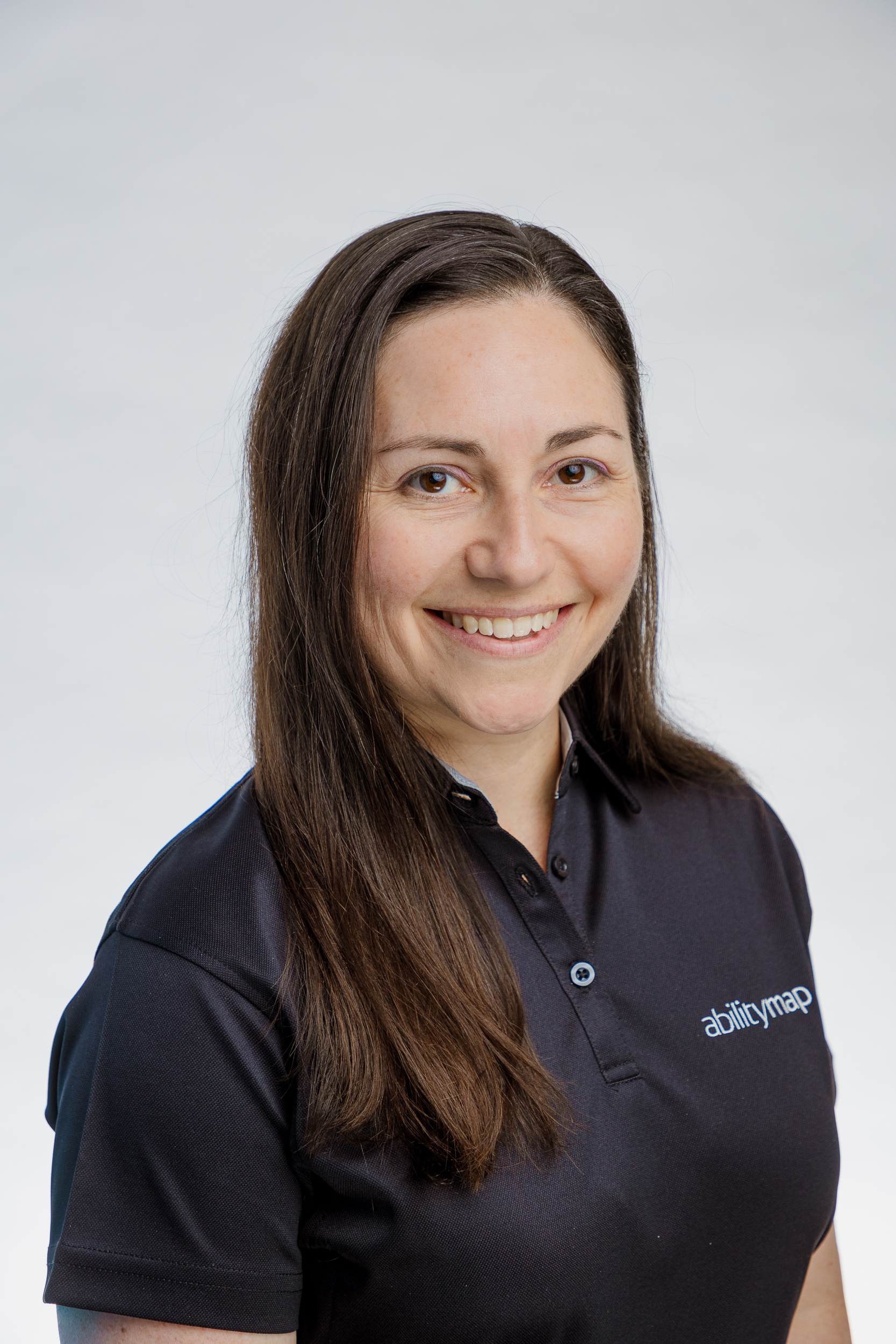
Vanessa Goryl
Alexandra Kahn
Register Now
Join AbilityMap’s experienced HR Practitioner, Vanessa Goryl and HR insight specialist Alexandra Khan for an informative look into the critical insights from AbilityLab’s latest research into the HR Professional of the future. Khan will quiz Goryl on specific capabilities, actionable insights, and what that means for different individuals and organisations.
The Big Picture
HR Professionals have been at the forefront of organisational disruptions due to COVID, digital change, and new models of work. And now, the future of human resources is in flux as a result of culture change, skills shortages and technology transformation. HR Professionals are being called on to tackle these challenges with new capabilities and tools. While COVID may have propelled HR Professionals to the spotlight of their organisations, adapting to the needs of the future will allow them to now thrive in this evolving landscape.
What we’ll discuss
- Critical capabilities required for the future HR professional
- Different work environments changing results for different personas
- How these insights can be applied to your organisation
We’ll deep dive into the three pillars of capabilities required for the future and what that means practically for you.
So we are going to have a fantastic conversation about performance, true HR leadership, and of course human-centric technology and using human-centric technology to drive organizational change. My name’s Ali Kahn, and I’ll be your host for the next 30 minutes. Before we kick off, I’d like to be I’d like to start by acknowledging the traditional owners of country and their ongoing connection to the land, sea, and communities that we are so privileged to work from today.
Me I’m personally zooming to you today from the Coolant Nation. So the lands of the Randie people. So let me officially introduce you to Vanessa Goral. So she is a master of human resources and industrial relations. She’s got about 15 years experience as an HR practitioner, and is the current outcomes lead here at Ability Map?
So Vanessa, I will let Vanessa introduce herself in more detail in a little bit, but she spent over 15 years understanding people and workplace change and driving workplace change formally with customers at Qantas New South Wales government and cornerstone. Hi Vanessa and thanks so much.
For sharing your insights with us today. And we are all very much looking forward to your thoughts on the webinar. Oh, thank you Ali. Thank you so much for having me. And I’d also like to pay my respects to the traditional custodians at the land from which I join you today. That’s the OG and GGA peoples, their elders, past, present, and emerging.
And thank you for the opportunity today. Really excited. What was your journey? How did you come to join Ability Map as the outcomes lead? That’s a great question. Having looked back over my career I couldn’t exactly call it a linear career path. I think it’s a little bit more of a scatterplot, but when I set out, after completing my.
HR degree. I wanted to become an HR consultant, so I sought opportunities that were across a range of HR functions and a range of industries, and that’s what led me to work in things like workforce planning, recruitment, REM and bend performance management. I’ve worked in hr, tech and business analysis, and I’ve worked in so many different industries in the public sector, the private sector, I’ve worked in manufacturing.
I’ve worked with planes. Trains and loved it. The only one I haven’t done is automobiles, that might be somewhere in my future. And ultimate, ultimately it led me to become an HR consultant, which I did for the last five years. And I. I’d met our C E o Mike Erlin while I was working at the New South Wales public Sector, and we had just launched the New South Wales Capability Framework and he told me about this capability assessment tool that was being developed.
And at that time, the New South Wales framework was used for all of the role descriptions. It was being used in recruitment processes, but at that stage, there was no assessment available. And through all my years, I’ve worked with lots of skills assessments and personality and psychometric assessments.
I’ve had them all done to me too, and I’ve been familiar with the New South Wales Capability Framework. And through, mostly through my consulting years, I’ve seen so many organizations really struggle with assessing and capturing skills required for work. So I could see this gap in capability assessment, and I knew I needed to be part of it.
And here I am. Fantastic. And so is that what led to this research piece then? It’s that gap in that capability assessment. And then applying that to the HR business partners. Can you tell us a little bit more around, what was that specific gap in knowledge that led to this HR business partner and future research and what does it feel?
Yep, sure. The gap that we’ve been finding over years is it’s really easy to say what the functional requirements of a role are, what kind of qualifications people need to have. Do they need a degree? Do they need a, a diploma? Do they need a trade certificate? And all of those sorts of things.
But the piece that for us in HR for a long time that’s been missing is around those human capabilities. So that’s really the gap we were trying to fill with this research. So we now know. Which capabilities will take HR forward into next year and beyond? So the, the. Thrust of it all was, the last two years has really shown everyone how critical HR is.
And this research brought together views from a number of HR professionals and they work across a range of different industries. And the main thing we wanted to tap into was to define those capabilities the HR bps are going to need in the future. So our HR BP future role. Sorry, H I V P of the Future role profile sets out those eight capabilities and that’s all included in the research paper, which I suspect a few people on the call today have read.
And the, this information can now be used to inform future HR recruitment, but also for professional growth opportunities for existing HR teams. And that’s, those capabilities were really the gap we were trying to fill. Unreal. And so really in that paper there was, I guess from that research and as you say most people on the call will have had the chance to read that research report and know that there are really those three key insights around those capabilities being true business partner, human-centric leader, and change champion.
So we’ll dive into each of those. In the coming questions and really tease out what those what those mean in practical terms. I wanted to get started with true business partner. And dive into that in a little bit more detail. I know that so obviously we had a breakfast, a a breakfast round table on the back of this research, and there was a really interesting discussion around the HR leader seated at the executive table.
So in the context of that true business partner, what does this research reveal and what practical advice can you share? Yep. The breakfast round table sure did raise some very interesting questions and it was definitely reinforcing the outcomes of our research. So one of the big things that came out of the round table was how critical the role of the H R B P became to businesses during covid.
Everybody needed their HR BPS at that time to, to help there. There was so many things going on at the time and HR was central to. Everyone getting through it. One of the challenges that was called out though at the breakfast was that the commerciality of HR is actually not really well understood by those outside of hr.
We get it. We are not sure those outside of HR understand it. So it is interesting that the business acumen was called out as a key capability of the HR BP of the future. And I think this rep represents a great opportunity for HR to capitalize on now that we’re, critically at that table. So business acumen, that’s one of the capabilities in the profile.
It’s about making commercially savvy decisions. It’s about being an astute business leader and that’s means, knowing what’s going on around you, not just what’s going on within your team or for your employees, but what’s really going on around you. And also capitalizing on commercial opportunities.
So in practical terms, what we’re finding is that there seems to be this language gap between HR and other business functions that needs to be bridged. And I use that term bridge deliberately because on the one side, the onus is on HR to speak the language of their fellow business partners in finance and technology and other executive functions.
But there’s actually also an opportunity to educate those partners as well on our language. Everyone has their own jargon. HR is no different, and the jargon can even change depending on which organization you’re in or which environment or division or department, even within an organization. So there’s definitely two sides to this communication piece.
Yeah, absolutely. Do you have an example of that where you’ve seen, that bridge that you talk about, do you have an example of, how that might play out? I. Yeah, the one that really comes to mind and I guess in the context at the moment of what everybody’s going through, it almost feels like post covid, but it’s not.
Yeah, someone in my household just came down with it today. But the example that I have is around attrition. Because everybody talks about that one, and most people understand what it means. And many of us can quantify it in dollar terms in, the cost of replacing employees. We can demonstrate that high attrition’s bad for business, right?
But this alone doesn’t make it a business problem. It’s still viewed as something that HR needs to manage. It’s something for them to figure out. So we need, I think, to take that guesswork out and build that bridge. Okay. There’s a few ways that you can do it. I know this is some of the stuff that I used to do in leading my team when I was in consulting is around understanding revenue forecasts.
So it could now be what’s the impact to our revenue forecast if our sales targets can’t be met due to sustained high attrition in our sales team? What if we’ve got a critical product that’s about to be released, but we can’t release it into the market when we’ve announced we’re going to, what’s the impact on earnings per share?
Because we’ve got high attrition in that area and we can’t get that product out to market. Thinking again with my background. Earnings per share doesn’t mean anything in a public sector environment. They don’t operate in those kinds of ways, but they do operate to fixed budgets.
So if you have high attrition and it’s increasing our reliance on things like casuals, contractors, agency staff, and you’re plugging nursing or teacher shortages, Which department’s budget’s going to be impacted to co to cover those costs? So it’s really about connecting the impact of the problems that HR are tasked with managing to the impact on the other functions of the business and conveying it in their language.
And this is what our commercially conscious hrps are doing, and I think they need to do it to make their voice heard in their environment. Yeah, absolutely. That, that attrition example really does highlight just how important it is to then have that business acumen and actually take that to take that to, to the table, to the executive.
So unreal. Yeah. Then we’ve got second, oh, sorry, go ahead. Oh, no, I was just no, please. You go. Oh I it just popped into our brain. I was thinking that, without people, there’s no profits. Without people, there’s no services. We all need people in the organization. It’s so critical. It is just about getting that message heard.
Yeah. Yeah. Oh, absolutely. And they are the pivotal asset in our businesses, and so it is so important. Assets. Yeah. I don’t need to say anymore. You’ve. Enough color to that. Talking about it being people-centric, let’s turn then to human-centric leader, which is the second insight that really came through the research As a business partner, what does that mean in practical terms?
Yep. So the human-centric leader, they’re an empathetic leader, they’re adaptive, and they’re authentic and a really key capability. So all of this is the ability to listen to others. So as an H, HR B P of course, this means listening to and caring about your employees. And we’ve certainly seen the rise of employee experience, people and culture as a focus for many organizations over the past five years or, and more.
It’s not just about the employees, it also means really listening to other business partners. Understanding things like their pain points. What are their teams or business goals? What are their commitments to shareholders? Certainly in, in many of my roles in hr, I wouldn’t know what the impact is to shareholders, but.
Bridge that gap. Go and understand understanding how the challenges you are managing, like attrition or talent shortages manifest in their areas of the business. Does it increase sick leave? Does it increase overtime? Does that introduce additional cost? Does it have no impact? Are they actually over resourced, which would be a luxury?
What are the impacts for their businesses? And learning the language of your colleagues in finance it, et cetera, to build that bridge. The human-centric leader is bringing both the people and the business perspectives into the HR strategy. And it requires the characteristics of that human-centric leader to really listen to and understand what’s affecting different business functions as well as the people.
And I guess, I suppose you could say it’s having people, empathy and business empathy. Yeah, I like that. People, empathy and business empathy. So there’s obviously there’s a lot of change as well in terms of moving to that point, which leads us into the third insight that came through the report, which is the change champion.
And. That probably doesn’t necessarily mean what it might on the outset, so can you please explain expand on that for us? Sure. So the, everybody knows things are changing rapidly. That, that’s no surprise. It’s part of everything that everybody does and as we’re seeing the baby boomer generation retire from the workforce, we’re seeing rapid changes in the workplace.
We’re seeing talented workforce shortages like we’ve never seen before, and the change we’ve been experiencing seems to have accelerated. In those last two years with reductions in things like skilled migration options as well, our research called out the need for the H hr BPS to be change champions, which means being proactive and positive in leading others through change.
It doesn’t mean being responsible for the change, but it is that you are proactive and positive when it’s around you, when it’s happening. And so for example if you’re leading talent acquisition and you in the past, this is how we always used to do it. You go and advertise and you get a lovely long list, and you get the short list.
You can invite five people to come and interview, and then you have the luxury of choice. You might have three or four amazing candidates to choose from. What we are hearing now is they’re not even getting five candidates to apply for a role. So HR really needs to move to very quickly doing things very differently, which is a big change.
So we’ve heard organizations who are needing to access non-traditional talent pool. We’ve had organizations focusing on internal mobility and playing to people’s strengths, moving people into different roles that. Functions they may never have thought of. But if they have a look at what their capability strengths are, where can they play best?
And redesigning jobs, cutting them down, tapping into part-time workers all sorts of things. Upskilling, re-skilling, cross skilling, it’s cross-functional teams, it’s all going on. That’s lot of change. That’s lot of change.
It’s a change in the process of the, of how things are done. It’s a change for your employees. All things are having this done to them. There’s change for your HR team to adapt to these new ways of working, new ways of sourcing candidates, your managers, they’re having to do things differently too.
The onboarding experience for somebody coming across from a different function is very different from people coming in from outside and also those. People, these people who can quickly adapt are at an advantage over others, and that’s why that H R B P change champion piece is so important. I.
Absolutely. I think we all feel it acutely. And we do look to HR VPs to help us through and navigate a lot of that, particularly where you’ve got that experience. And as you say, those capabilities are just so critical moving forward as it happens faster and faster. Yeah. So then, we’ve gone through those three key insights and we’ve defined, that hr, BP of the future and what it looks like, where to from here.
Oh, that’s a great question. There’s just so much more to explore. We do actually have a couple of questions that I can see coming through. I’ll read them out if you are okay to field them. So the first one is do we know what other execs at the table think the h BP should possess versus what HR bps think which should possessed?
Oh, that’s a fabulous question. That, to be honest, no not in a structured formal, Viewpoint, what we have heard from the breakfast round table is that there are differing views. So one of the next steps we want to take with this research is actually going out to different stakeholders that interact with HR to really understand what they need.
I know I’ve been working with an organization that’s actually done that as part of their finance leadership. They’ve not only talked within their finance team what do we need from ourselves, but also gone out to their direct stakeholders to find out what they want from them. So this is yeah, definitely our next step for the research.
Great question. So like a phase two? Like a phase two? Yeah. Phase two. Yep. If we wanted to do this in our own company environment, can we, yes. Absolutely. So the survey that we invited the HR professionals to participate in is all built in as part of our software tool. And it takes about 10 minutes per person to go through all of our capabilities and decide which ones are critical for the business.
And there’s a few different ways we could. If there’s one person who’s the expert and they know everything, then we rely on their input. I. There’s other ways where we go out to a broad group of people and get lots of views and consolidate those together. And it’s all automated in the platform. It does it nice and quickly for everybody.
And there’s another way we can look at it. If we actually have a group of people who are really championing the values of the business, they’re the high performers in these particular roles, we can actually ask them to go and do the assessment and take a look at their consolidated results and see what capabilities they share.
That makes them amazing. So there’s a few different ways and Yes, absolutely. And the best way to do that, reach out to me, say hi, and we’ll set you up to, to give it a go in your organization. Yeah. Fantastic. I can imagine that’s incredibly valuable. ’cause as we know, the environment shapes everything, doesn’t it?
It absolutely does. And I’ve, I worked in HR in RailCorp, which is all trains in heavy machinery. And I worked in Qantas, which is also lots of heavy machinery, but planes, it’s just trains in the sky. And that they’re so different. They have so many of the same types of people who work there, but one was founded by the military and it’s a public sector organization that’s a very different.
Culture and structure of an organization and challenges they face compared with a household brand like Qantas is so steeped in Australian history and tradition and so on and so forth. So HR in those two environments, completely different. Yeah. And it’s so easy to assume that they would be the same from the outset.
Yeah. Fantastic. I’m just looking at the time. That probably feels like a great point to end the webinar. We know that there’s so much more research that we haven’t covered on the call today. Vanessa, thank you so much for being so open and really just sharing so much of that experience in going into so much detail with all of us today.
I think I have no doubt that there was just. So many takeaways that people can just look at their own and reflect on. So thank you so much. Also to everyone who attended the session for taking the time to read the report and actually attend, it was just fantastic to have you here.
So thank you again everyone. Thank you Vanessa, and I hope you all have. Thank you very much rest of the day.